

Buy a Mechanical Game Recovery System: 2026 Guide
Table of Contents
- What a Mechanical Game Recovery System Actually Does
- Mechanical vs. Electronic Recovery Systems: Which Fits Your Hunt
- Best UTV Tires for Hauling Heavy Game
- Mechanical Game Hoist for Truck: When a Hitch Mount Beats a Bed Crane
- Solo Elk Hunting Gear: Building a One-Person Recovery Kit
- Pricing, Setup, and Maintenance: What to Expect
- Frequently Asked Questions
Last Updated: September 30, 2026
What a Mechanical Game Recovery System Actually Does
A mechanical game recovery system is a hitch-mounted attachment that uses a winch or pivot arm to lift and secure large game onto a UTV without manual dragging. For hunters who need to buy a mechanical game recovery system, the value is simple: one person can load an elk or moose alone, on uneven ground, without wrecking their back.

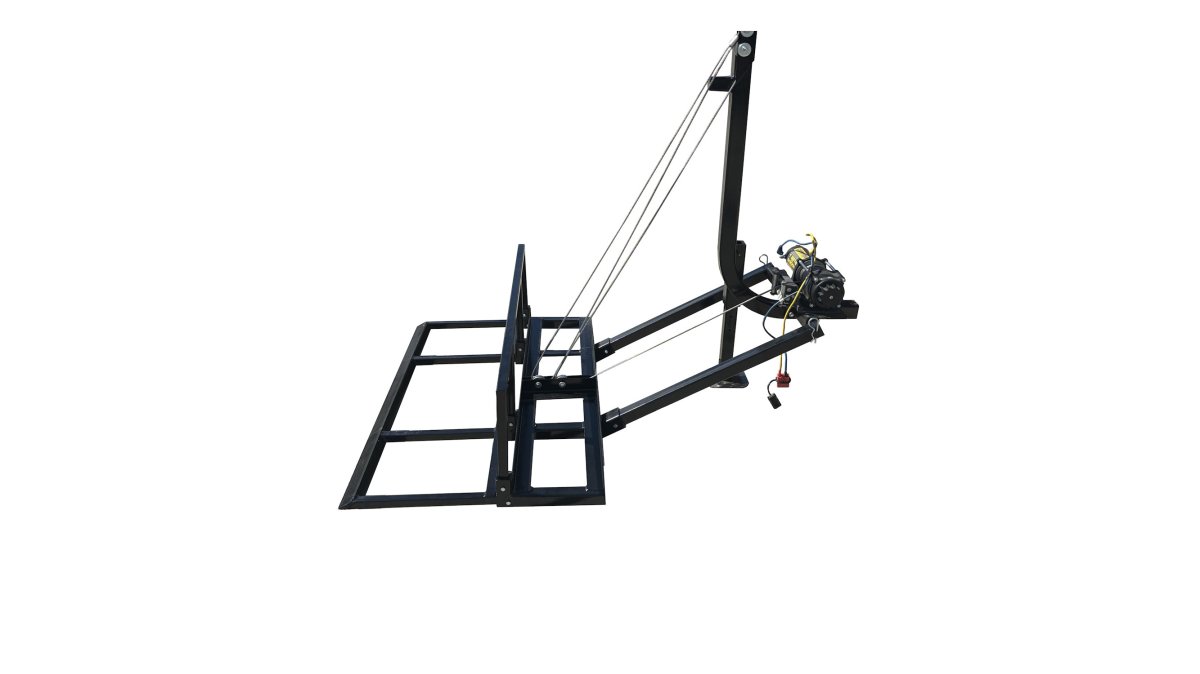
Dragging a field-dressed elk a few hundred metres through deadfall and up a cutbank is the part of the hunt that ends seasons early. Many hunters over 50 find the pack-out, not the pursuit, forces them to stop hunting solo. A mechanical system changes that equation.
This guide from Elk Hauler covers how these systems work, how mechanical designs differ from electronic ones, what to look for in tires and hoists, and what a realistic setup costs.
Mechanical vs. Electronic Recovery Systems: Which Fits Your Hunt
Mechanical systems win on reliability and cost; electronic systems win on convenience when they work.
Best UTV Tires for Hauling Heavy Game
The best UTV tires for hauling heavy game are radial 8-ply or 10-ply tires with an aggressive, self-cleaning tread, run at a pressure matched to the load on each axle. Load rating matters more than tread pattern when carrying a field-dressed elk quarter plus a hitch-mounted recovery attachment on the rear.
Priority |
What to Look For |
Why It Matters |
|---|---|---|
Load rating |
8-ply or 10-ply radial, load index matched to your rear axle |
Handles game weight plus attachment plus tongue weight |
Tread |
Aggressive, self-cleaning lugs with open voids |
Grip and clean-out on mud, rock, and loose shale |
Sidewall |
Reinforced, 6-ply minimum sidewall |
Resists punctures from deadfall and sidewall roll on off-camber ground |
Pressure |
Set per axle, not per vehicle |
Rear tires carry the recovery load; front tires do not |
Size |
Taller, narrower profile for sidehill work |
Tracks straighter under a rear load than a wide mud tire |
Reading the load index, not just the ply count
Ply rating is a legacy label; the load index molded into the sidewall governs your safety margin. A common utility UTV tire in 27x9-14 or 27x11-14 carries a load index in the 70s, roughly 340-360 kg per tire at maximum inflation. Two rear tires give a rear-axle capacity of 680-720 kg, enough for a quartered elk plus the attachment, but not a full cooler and a second rider without checking the math.
Tire pressure is a load calculation, not a preference
Running 2-3 psi below trail spec is a starting point, not a rule. Correct pressure depends on the weight the tire carries: a rear tire carrying 150 kg needs more pressure than one carrying 60 kg, or it will squirm, heat up, and roll the sidewall on off-camber ground.
A practical field method:
- Set cold pressure to the tire manufacturer's recommendation for the loaded weight, not the vehicle placard.
- Check pressure cold, before the first climb. Heat from a long sidehill run can add several psi.
- If the sidewall is bulging more than about a third of its height at the contact patch, add pressure.
- If the tire is rutting soft ground instead of floating, drop pressure in 1 psi increments and re-check.
Match the tire to the terrain you actually hunt
A wide, heavy mud tire looks capable in a showroom and fights you on a shale sidehill. A taller, narrower tire with a reinforced sidewall tracks straighter under a rear load. For mixed bush, rock, and cutbank terrain, a radial with moderately aggressive tread and a stiff sidewall beats a dedicated mud tire.
Mechanical Game Hoist for Truck: When a Hitch Mount Beats a Bed Crane
A hitch-mounted hoist beats a bed crane when you hunt solo, drive a standard pickup or UTV, and want the lifting point behind the vehicle rather than above it. A bed crane needs a mounting plate, takes up bed space, and puts the load high, raising your centre of gravity on a sidehill.
Solo Elk Hunting Gear: Building a One-Person Recovery Kit
Solo elk hunting gear should follow one rule: every tool must be operable with one pair of hands and no second person. That rules out anything needing a spotter, a second winch line, or a helper to stabilise the load.
A practical one-person recovery kit includes:
- A hitch-mounted mechanical recovery attachment with a geared winch
- Two heavy-duty ratchet straps rated well above your expected load
- A game bag set and a folding saw for quartering
- Gloves with grip, not just warmth
- A headlamp with spare batteries
- A basic tool kit for the attachment and the UTV
Pricing, Setup, and Maintenance: What to Expect
The Elk Hauler UTV attachment is available for $1,500.00. This reflects what the category costs to build in North America with a geared winch, a rated receiver interface, and a warranty.
Setup: what a real first install looks like
Setup is quick but not zero-thought. A hitch-mounted mechanical system follows the same sequence every time:
- Confirm your receiver class and tongue-weight rating. Class III and IV receivers are the common baseline for these attachments; a Class II receiver is usually not rated for the combined attachment and game load.
- Insert the shank into the receiver and seat it fully. A shank that is not fully seated puts the load on the pin instead of the tube.
- Install the hitch pin and secure the clip. Check for play, a shank that rocks in the receiver will wear both parts.
- Connect any wiring for a powered winch, or confirm the hand-crank mechanism turns freely through its full range before loading.
- Test the lift with a dead weight at or near your expected load, on flat ground, before you trust it on a slope.
Maintenance: the seasonal routine that keeps a mechanical system mechanical
Mechanical systems earn their keep in maintenance because there is less to fail. A short seasonal routine covers most of it:
- Grease the winch gears, the pivot points, and the ratchet mechanism. Cold weather stiffens old grease; use a low-temperature-rated grease if you hunt late season.
- Inspect the hitch pin, the shank, and the receiver for wear, elongation, or rust pitting. Replace the pin at the first sign of wear, it is a cheap part with an expensive failure mode.
- Check straps for fraying, UV damage, and worn stitching. Replace before they fail, not after.
- Inspect the winch cable or strap for kinks, fraying, or corrosion. A kinked cable under load is a snap waiting to happen.
- Store the unit dry and out of the weather. A covered unit lasts years longer than one left on the receiver through a wet fall.
- Re-check all fasteners at the start of each season. Vibration loosens bolts that were tight in the shop.
Safety protocols the category usually skips
A few rules apply to every mechanical recovery system, regardless of brand:
- Never exceed the rated lift capacity, even briefly. Overloading stresses the receiver, the winch, and the frame at once, and the failure point is rarely the part you are watching.
- Never stand under or in line with a suspended load. If a cable or strap fails, the load drops and the recoil travels along the line.
- Chock the vehicle and set the parking brake before lifting. A UTV on a slope with a rear load can roll.
- Keep hands and clothing clear of the winch drum, gears, and any pinch point during operation.
- Re-check the load and the attachment after the first few kilometres on any public road. The Transport Canada guidance on securing loads applies to game as much as to any other cargo.
Warranty and support: the question to ask every seller
Before you buy a mechanical game recovery system from anyone, ask three questions: What is the rated lift capacity, and is it in writing? What does the warranty cover, and for how long? Who do you contact if a part fails, and how fast do they respond?
Frequently Asked Questions
What is a mechanical game recovery system?
A mechanical game recovery system is a hitch-mounted or vehicle-attached device that uses leverage, winching, or lifting arms to move large game from the field to your vehicle without manual dragging. These systems typically mount to a UTV receiver hitch or truck bed and can handle hundreds of pounds. The Elk Hauler, for example, lifts 700+ lbs and mounts directly to most utility UTV receiver hitches with a standard hitch pin and wiring connection.
Can a single hunter recover a moose using mechanical equipment?
Yes. A mechanical game recovery system designed for solo operation lets one person load and transport a moose without waiting for help. The key is a unit that mounts to your vehicle and does the lifting for you. The Elk Hauler is built for one-person operation and handles 700+ lbs, which covers most moose quarters and full elk carcasses. You still need to quarter the animal, but the physical strain of lifting and dragging is eliminated.
What should I look for when buying a game recovery system for my UTV?
Check four things: lift capacity (700+ lbs covers elk and moose), mounting compatibility (receiver hitch vs. bed mount), one-person operation (can you load and unload alone?), and terrain capability (will it work on the slopes you actually hunt?). Also confirm warranty coverage and whether the manufacturer ships to your region. The Elk Hauler checks all four and is backed by a 1-year limited warranty against manufacturing defects.
Are mechanical game recovery systems legal in all provinces?
Legality depends on how and where you use the system. Using a UTV-mounted attachment on private land or established trails is generally fine. Some provinces restrict motorized vehicle access on certain public lands or during specific seasons, so check your provincial hunting regulations before heading out. The equipment itself is legal to own and use; the restrictions typically apply to vehicle access, not the attachment.