

Hauling Heavy Game on Slopes: A UTV How-To Guide
Table of Contents
- Hauling Heavy Game on Slopes: What Changes When the Ground Tilts
- What You'll Need Before You Head Up the Hill
- Step 1: Pick the Right UTV Game Hauling Attachment
- Step 2: Get Safe UTV Load Distribution on Hills
- Step 3: Climbing a Slope With a Loaded UTV
- Step 4: Hauling Heavy Loads Downhill With a UTV
- Step 5: Choosing the Best UTV Tires for Hauling Heavy Game
- Common Mistakes That Turn a Haul Into a Recovery
- Frequently Asked Questions
Last Updated: October 13, 2026
Hauling Heavy Game on Slopes: What Changes When the Ground Tilts
Hauling heavy game on slopes is a different job than dragging a deer across flat ground. At Elk Hauler, we build game recovery attachments for exactly this problem.

The core issue is simple: every kilogram on your UTV shifts its center of gravity.
Below, we break down the full process, from pre-trip checks to downhill braking, so a steep pack-out does not turn into a bad story.
What You'll Need Before You Head Up the Hill
Preparation is what separates a clean haul from a long afternoon. Check your machine and your gear before you leave the trailhead, not when you are already on a grade.
Vehicle and Attachment Checks
Start with the connection between your UTV and whatever you are using to carry the load.
- Confirm your receiver hitch is rated for the load you plan to carry.
- Check tire pressure and tread depth on all four wheels.
- Inspect brakes, including the parking brake.
- Test your winch and any straps or rigging you plan to use.
- Verify your attachment is secured with the hitch pin and wiring is connected.
For a receiver-hitch setup like the Elk Hauler, that means inserting the unit, securing it with the hitch pin, and connecting the wiring. Never exceed your UTV's rated capacity, whichever is lower than the attachment's limit.
Load Limits and Weight Distribution
Before you load, know your numbers. Your UTV has a gross vehicle weight rating (GVWR) and a payload capacity. The attachment has its own rating. The safe load is the lowest of these.
Weight distribution is just as important. Keep the load low, centered, and as close to the machine's midpoint as possible. A load placed high or far back raises your center of gravity and can lift the front wheels on a climb.
Emergency Recovery Planning
A recovery plan is not overkill. It is what keeps a stuck machine from becoming an injured hunter.
- Carry a winch, tow rope, and at least one snatch block.
- Bring traction boards or a shovel for soft ground.
- Tell someone your route and expected return time.
- Identify a turnaround point before you commit to a climb.
- Know how to use your winch safely: anchor points, line angles, and never stand in the line of a loaded cable.
"Written plan" can mean a note on your phone. The point is that you have thought through what happens if the machine cannot make the grade.
Step 1: Pick the Right UTV Game Hauling Attachment
The right UTV game hauling attachment keeps the load low, centered, and close to the machine. That is the whole game on a slope.
A receiver-hitch design that holds game behind the machine at a controlled height does two things.
Here is how the main options stack up:
| Attachment Type | Load Position | Slope Suitability | Best For |
|---|---|---|---|
| Basic cargo rack | High, on the bed | Poor on steep grades | Flat-ground hauling |
| Roof or bed-mounted winch lift | High, above the bed | Moderate | Lifting onto the machine |
| Receiver-hitch game hauler | Low, behind the machine | Good on moderate grades | One-person recovery |
The Elk Hauler is a receiver-hitch attachment built for exactly this: one person recovering elk, moose, or deer on terrain your UTV can safely handle. It is protected under U.S. patent law.
Step 2: Get Safe UTV Load Distribution on Hills
Safe UTV load distribution on hills means keeping the weight low, centered, and as close to the machine's midpoint as possible. Get this wrong and no amount of throttle control will save you.
Think of your UTV as a triangle. The wider the base and the lower the weight, the harder it is to tip. Load too far back and you lift the front. Load too high and you raise the whole triangle.
A few practical rules:
- Keep the load centered between the axles where you can.
- Avoid stacking weight above the bed line.
- Secure everything so it cannot shift on a bump.
- Re-check the load after the first few minutes of travel.
Step 3: Climbing a Slope With a Loaded UTV
Climbing a slope with a loaded UTV comes down to three things: low range, steady throttle, and knowing when to stop. Momentum is your friend on the way up, but only if you keep control.
Line up straight before you start. Turning on a grade while loaded is where a lot of machines go over. Pick your line, commit, and keep the wheels pointed uphill.
Low Range, Throttle Control, and Wheel Slip
Low range gives you torque without speed. That is exactly what you want on a climb.
- Shift into low range before the grade, not halfway up.
- Apply throttle smoothly. Sudden inputs break traction.
- If you feel wheel slip, ease off slightly rather than flooring it.
- Keep a steady pace. Stop-and-go on a slope is risky.
If you lose traction and start sliding, do not panic-brake. Steer into the slide, ease off the throttle, and let the machine settle before you try again.
Step 4: Hauling Heavy Loads Downhill With a UTV
Hauling heavy loads downhill with a UTV is where most people get it wrong. Gravity is now working with you, which sounds easier. It is not.
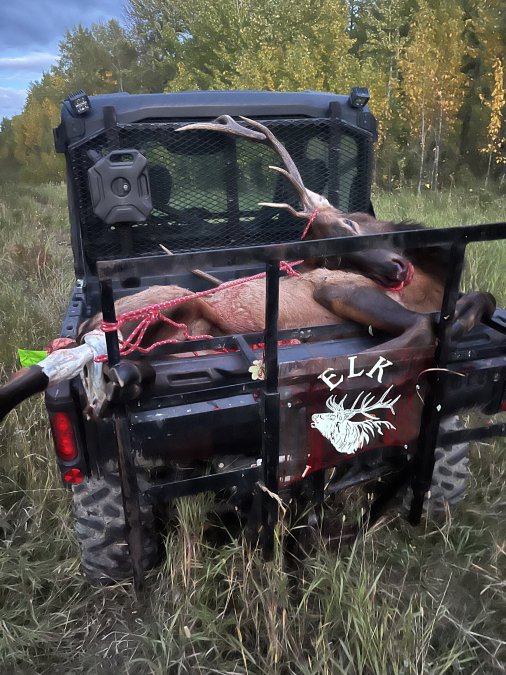
On a descent, the load wants to push the machine. Your brakes have to manage both the UTV and everything behind it.
Understanding Grade and Its Effect on Braking
A 10% grade means the road drops 1 meter for every 10 meters of travel. On a 20% grade, the load's weight shifts dramatically forward. Most UTV brakes are designed for the vehicle's gross weight, not for a heavy trailer or attachment pushing from behind. When you add 317+ kg behind the machine, your stopping distance can double or triple on a steep descent.
Trailer Braking and Tongue Weight
If your attachment has its own braking system, use it. Trailer brakes are not a luxury on slopes; they are a necessity. For receiver-hitch attachments without integrated brakes, you must rely on engine braking and light, steady brake application. Tongue weight matters: too much weight behind the axle lifts the front and reduces steering. Keep the load as balanced as the attachment allows, and test your brakes on a gentle grade before committing to a steep one.
Downhill Technique That Works
- Stay in low range. Engine braking helps control speed.
- Use light, steady brake pressure. Do not ride the brakes.
- Keep the machine pointed straight downhill.
- Avoid sharp turns. They invite a rollover.
- If you feel the load pushing you, slow down before the grade steepens, not after.
When to Turn Around
If the grade exceeds your comfort or your machine's capability, turn around. There is no shame in backing down a slope you cannot safely descend. Use low range and reverse slowly, keeping the load behind you. If you cannot reverse safely, winch the machine down or find an alternate route. The goal is to get home, not to prove a point.
Step 5: Choosing the Best UTV Tires for Hauling Heavy Game
The best UTV tires for hauling heavy game are ones with deep tread and a load rating that matches your machine and your terrain. Traction is the difference between climbing and spinning.
What to look for:
- Aggressive tread for loose dirt, rock, and mud.
- A load rating that covers your machine plus the game.
- Sidewall strength for rocky ground.
- Consistent pressure across all four tires.
Worn or underinflated tires slip early. On a slope, that slip costs you momentum and control. Check pressure before every trip.
Common Mistakes That Turn a Haul Into a Recovery
Most recoveries start with a decision made before the wheels ever turned. Here are the ones we see most.
- Loading game high and at the rear of the machine.
- Skipping low range and trying to climb in high gear.
- Turning on a steep grade while loaded.
- Riding the brakes all the way down instead of using engine braking.
- Heading out solo with no winch, no rope, and no plan.
A single hunter can manage a heavy haul on a slope. It just takes the right attachment, proper load placement, and a plan for when things go wrong. The Elk Hauler is built for that job: one-person operation, a 317+ kg rating, and a receiver-hitch design that keeps the load low and stable on terrain your UTV can safely handle. It ships across Canada and the United States and is backed by a 1-year limited warranty against manufacturing defects.
Frequently Asked Questions
If you have to carry a load down a steep slope, what should you do?
Shift into low range before you start the descent, not partway down. Keep the transmission in gear so engine braking holds the load back, and use the brakes in short, firm applications rather than riding them. Point the machine straight down the fall line, keep your speed at a walking pace, and avoid turning sharply while the load is pushing. If the surface is loose or wet, walk the route first and pick a gentler line. The same rules apply whether you're hauling heavy game on slopes or any other heavy trailer load.
How do you keep a UTV stable while hauling a heavy load on a slope?
Keep the center of gravity low and the weight centered over the rear axle rather than hanging off the back. Secure the game tight so it can't rock or slide when you hit a rock or a rut, and match your tire pressure to the terrain. Wide, aggressive tires help on soft ground, but on hard-packed sidehills they can reduce grip. Avoid sidehilling whenever you can. If a slope feels wrong at the bottom, it will feel worse halfway up with a 180 kg elk on the back.
What is the safest way to haul an elk uphill with a UTV?
Use low range and steady throttle, and let the machine pull rather than trying to build speed. A receiver-hitch attachment such as the Elk Hauler keeps the load behind the machine and low to the ground, which reduces the chance of a tip-over on a climb. Stay under your UTV's rated capacity, and remember that the 317+ kg maximum is capped by whichever figure is lower. If the grade is too steep for the machine to hold traction, winch instead of pushing it.
How should you secure game to a UTV hauling attachment?
Strap the animal down at two or more points so it cannot rock or slide, and check the straps after the first few minutes of driving. On a receiver-hitch attachment, keep the load as close to the hitch as the design allows. If you're using a rope or ratchet strap, use one rated well above the load weight and inspect it for fraying before every trip. A loose load shifts on a downhill grade and can pull the machine sideways.
Steep ground does not have to end your season. With a purpose-built attachment and the right technique, one hunter can bring out an elk or moose without wrecking their back. The Elk Hauler mounts to most utility UTVs with a receiver hitch, handles 317+ kg within your machine's rating, and is engineered in Alberta for real terrain. Get started with Elk Hauler and simplify your next pack-out.