

UTV Game Hoist for Sale: What to Know Before You Buy
Table of Contents
- UTV Game Hoist for Sale: What Actually Matters
- Hitch-Mounted Game Hoist vs. Rack and Lift Systems
- UTV Game Hoist Load Capacity: Matching the Hoist to Your Game
- Fitment: Receiver Specs and UTV Model Compatibility
- The One-Person UTV Deer Loader: Operating Solo in the Field
- UTV Deer Loader Setup: Installation, Safety, and Load Stability
- How to Choose: Buying Advice by Game Size and Hunting Scenario
- Conclusion
- Frequently Asked Questions
Last Updated: October 20, 2026
UTV Game Hoist for Sale: What Actually Matters
Shopping for a UTV game hoist for sale is mostly an exercise in reading specs carefully, because the marketing pages blur together fast. Here's the short version: a UTV game hoist is a receiver- or rack-mounted lifting system that uses a winch and gambrel to raise harvested game onto your machine, so you're not deadlifting a quartered elk by hand. At Elk Hauler, we build a purpose-built UTV attachment for exactly this job.
The trap most people fall into is buying on capacity alone. A 300-pound rating tells you almost nothing if the receiver on your machine can't take the tongue weight, or if you hunt solo and can't operate the winch and guide the load at the same time. Below, we'll walk through the four decisions that actually separate a hoist that works from one that sits in the shed.
Hitch-Mounted Game Hoist vs. Rack and Lift Systems
Two broad families exist, and they solve different problems. A hitch-mounted game hoist slides into your receiver and uses a vertical mast plus a winch to lift game off the ground. A rack and lift system mounts over the cargo bed and raises game onto a platform or rack. Hitch-mounted units are easier to move between machines and store flat. Rack systems keep the load centered over the bed, which helps on rough ground.
Most listings show one product at a time, so here is the side-by-side comparison the category pages skip:
| Feature | Hitch-mounted hoist | Rack and lift system |
|---|---|---|
| Mounting point | 2-inch receiver (confirm rating) | Bed rails or integrated rack |
| Typical lift capacity | 300-600 lb | 300-500 lb |
| Load position | Behind the machine, off the bed | Centered over the bed |
| Bed space | Stays free for gear | Occupied by rack and load |
| Swap between machines | Yes, if receiver fits | Usually machine-specific |
| Storage | Mast removes, stores flat | Rack stays mounted or needs tools |
| Best for | Solo hunters, mixed fleet | Heavy game, rough ground |
| Included components | Varies: winch, gambrel, strap | Varies: winch, platform, hardware |
Which one fits you depends on how you hunt:
- Hitch-mounted: best if you swap between a UTV and a truck, or want the bed free for gear
- Rack and lift: best if you consistently haul heavy game and want the weight over the axle
- Combination setups: some hunters run a receiver mast plus a bed rack for flexibility
A common mistake is buying a rack system for a machine with a short or modified bed. Measure first, then buy. Also check what ships in the box: some hitch hoists include the winch and gambrel, others sell them separately, and that changes the real cost more than the sticker price suggests.
UTV Game Hoist Load Capacity: Matching the Hoist to Your Game
Load capacity is the number everyone fixates on, and it's the one most often misunderstood. UTV game hoist load capacity refers to the maximum weight the lifting system is rated to raise, not the weight your UTV can carry. Those are two different limits, and exceeding either one is how equipment fails.
Match the hoist to what you actually hunt:
- Deer and antelope: a 300-pound capacity unit covers most field-dressed animals
- Elk and moose: look at 350-pound and 600-pound capacity systems, and check the winch rating separately
- Quartered loads: if you quarter in the field, a lower capacity hoist works fine because you're lifting one piece at a time
Here's the part listings gloss over: the winch rating and the hoist rating are not the same thing. A 2,000-pound winch on a mast rated for 350 pounds does not make it a 2,000-pound hoist. The mast, mount, and receiver are the weak links.
Fitment: Receiver Specs and UTV Model Compatibility
Fitment is where most returns happen. Before you buy any receiver-mounted hoist, confirm three things about your machine: receiver size, receiver rating, and bed clearance.
Receiver size is almost always 2 inches on utility UTVs, but older and modified machines are where this gets messy. If your receiver was added aftermarket, measure the inside opening rather than trusting the listing. A receiver that is not 2 inches will not accept a standard 2-inch shank without an adapter, and adapters reduce the effective tongue rating.
Receiver rating is the tongue weight limit. A hoist plus a field-dressed deer plus the mast itself adds up faster than people expect. Check your owner's manual for the tongue weight figure before you commit. As a rule of thumb, a 300-pound hoist with a 150-pound animal and a 40-pound mast puts roughly 490 pounds of static load on the receiver before any swinging motion.
Bed clearance matters for rack systems and for hitch masts that tilt. A lift that clears a stock bed may foul a headache rack, a toolbox, or an aftermarket bumper. Measure from the receiver pin to the nearest obstruction and compare it to the mast's folded and raised dimensions in the listing.
Model-specific notes that listings rarely spell out:
- Mid-size utility UTVs often have a 2-inch receiver but a lower tongue rating than full-size machines; confirm the manual figure rather than assuming.
- Older machines with aftermarket receivers may have a receiver welded or bolted on without a published rating; treat the mounting hardware as the weak link and inspect it before use.
- Machines with bed extensions or dump beds can change clearance when the bed is raised; test the hoist with the bed in both positions.
- Tracked or widened machines may need a hitch extension, which reduces tongue capacity; factor that into the load math.
If you've modified your machine, the safe move is to measure the receiver opening, confirm the tongue rating in the manual, and check clearance with the bed loaded. Most fitment problems are solved before checkout, not after.
The One-Person UTV Deer Loader: Operating Solo in the Field
This is the section that matters most if you hunt alone, and it's the one competitors skip. A one-person UTV deer loader only works if you can run the winch and guide the load at the same time. That means the control setup is not a detail, it's the whole purchase.
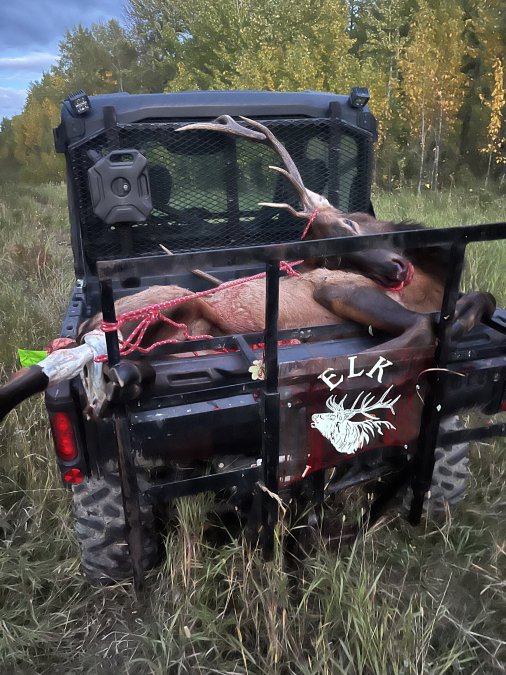
What to look for:
- Wired remote so you're not reaching over the load to hit a switch
- A mast that holds position while you reposition the animal
- A gambrel and strap setup that lets you hook on without lifting
- Stability on slopes, which usually comes down to how the mast is braced
The honest limitation: no hoist turns a two-person job into magic. What a good one does is remove the lift from your back and put it on the winch. If you're 58 and your back has already taken a beating, that difference is the entire point.
UTV Deer Loader Setup: Installation, Safety, and Load Stability
Setup is straightforward on most machines, but the safety steps are where people cut corners. Install the mount, torque the hardware to spec, and test the winch with no load before you put an animal on it.
Load stability is the piece that separates a clean lift from a dangerous one. A swinging load on a sidehill can tip a machine or snap a mount. Keep the load low until it's secured, avoid lifting on steep side slopes, and use a strap to steady the animal once it's up.
A quick pre-hunt checklist:
- Mount hardware torqued to spec
- Winch tested with no load
- Receiver and tongue rating confirmed
- Gambrel and straps inspected for wear
- Remote cable routed clear of moving parts
- Load steadied before moving the machine
Run that list once before the season and again after any rough trip. It takes five minutes and prevents most field failures.
How to Choose: Buying Advice by Game Size and Hunting Scenario
Buying advice gets simpler once you match the hoist to your actual hunt rather than the spec sheet. Use this as a starting framework:
| Your scenario | Priority spec | What to check |
|---|---|---|
| Solo deer hunter, stock UTV | 300-pound capacity, wired remote | Receiver rating and control reach |
| Elk or moose, solo | 350-600 pound capacity | Mast bracing and winch rating |
| Modified or older UTV | Fitment first | Measure receiver, confirm tongue weight |
| Swap between truck and UTV | Hitch-mounted | Weight and storage footprint |
| Rough, steep terrain | Load stability | Mast base and strap setup |
A few buying notes that don't show up in listings. Ask what's included: some systems ship with the winch and gambrel, others don't, and that changes the real cost. Ask about warranty and support, because a specialized attachment is only as good as the company behind it. And ask whether the system is rated for one-person operation, since that's the whole reason most hunters buy one.
Pricing depends on configuration and what's included. Check current pricing and specs directly before you decide.
Conclusion
The hard part of buying a UTV game hoist isn't finding one for sale. It's matching capacity, fitment, and solo operation to how you actually hunt, and most listings don't help you do that. Get those three right and the pack-out stops being the worst part of the season.
At Elk Hauler, we built our attachment for exactly this problem. It's purpose-built for elk, moose, and other large game, engineered in Alberta and U.S. patented, and designed so one hunter can manage a heavy animal across rough terrain. It's utility UTV compatible, backed by a one-year warranty, and built to take the strain off your back. SHOP NOW
Frequently Asked Questions
How much weight can a UTV game hoist lift?
It depends on the hoist and its winch. Many hitch-mounted units are built around 300- to 600-pound capacities, with winch ratings of 2,000 to 3,000 pounds doing the actual pulling. The winch rating is not the same as the load capacity, so check both figures before you buy. Match the rated capacity to the heaviest quarter or whole animal you expect to handle, and leave a margin for uneven ground and slope angles that add strain.
Can you use an ATV game hoist on a UTV?
Often yes, if the hoist uses a standard receiver hitch and the UTV has a compatible receiver. The bigger question is vehicle compatibility: a UTV's receiver height, frame strength, and cargo bed clearance all affect how a hoist fits and operates. Confirm receiver size, check the hoist's mounting requirements against your specific model, and test the swing and lift range before relying on it in the field.
How does a UTV deer loader attach to the vehicle?
Most hitch-mounted game hoists slide into the UTV's rear receiver hitch and lock in with a pin, then use a vertical mast and boom with a winch to lift and swing game over the bed. Some systems also brace against the bed or frame for added stability. Installation is usually a matter of minutes with basic tools, but check that the receiver is rated for the load and that the hoist clears your tailgate and bed sides.
Is a UTV game hoist worth it for big-game hunting?
For solo hunters and anyone handling elk or moose in remote terrain, a game hoist can replace the manual lift that causes most pack-out injuries. It lets one person load and position heavy game without deadlifting quarters onto a rack. Whether it pays off depends on how often you hunt, the terrain you cover, and your physical limits. If you regularly hunt alone or want to protect your back, the case is strong.