

Best UTV Attachments for Big Game: A 2026 Guide
Table of Contents
- What to Look for in UTV Attachments for Big Game
- UTV Game Hauler: The Core of a One-Person Retrieval Setup
- UTV Attachments for Hauling Elk: Matching Gear to Species and Terrain
- UTV Trailer for Hunting: When a Trailer Beats a Bed Attachment
- Best UTV Tires for Hauling Heavy Game
- Field-to-Truck Retrieval Workflow
- Attachment Costs and Value Tiers
- Conclusion
- Frequently Asked Questions
Last Updated: October 18, 2026
What to Look for in UTV Attachments for Big Game
The best UTV attachments for big game are sized to your machine, terrain, and the animal you hunt. Fitment, rated load, and receiver compatibility decide whether an attachment works in the field or sits in the shop, not price.
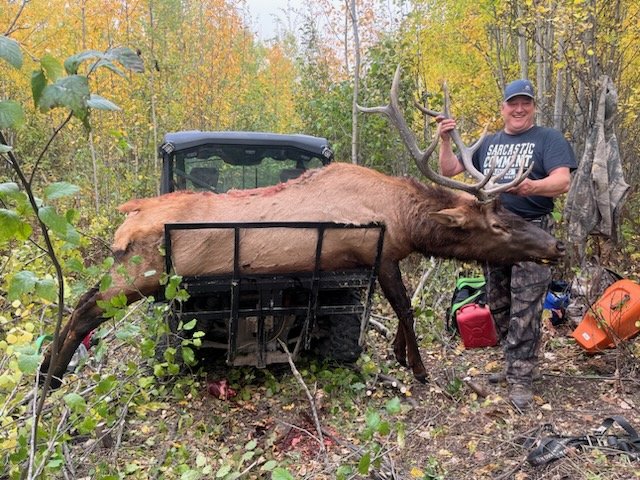
At Elk Hauler, we build one product for one job: getting elk and moose out of rough country with one person doing the work. That focus shapes every category below.

Fitment and Receiver Compatibility
Receiver hitch compatibility is the first filter. A utility UTV attachment only works if your machine's receiver hitch is rated for the load you plan to carry, check your owner's manual first.
Three things to confirm:
- Receiver size and rating. Most utility side-by-sides use a standard receiver, but the rated tongue weight varies by model.
- Mounting hardware. Confirm the attachment ships with the pins, bolts, and wiring you need, or budget for them separately.
- Clearance. Bed extenders, cargo racks, and haulers all change your departure angle. On steep ground, that matters.
If you're unsure whether your setup is suitable, ask the manufacturer directly before ordering. We tell Elk Hauler customers to email us with their UTV model and year rather than guess.
Payload and Load Calculations
Payload math surprises most hunters. Your UTV's rated capacity covers the machine, occupants, cargo, and the tongue weight of anything on the hitch. Add a quartered elk and a full cooler and you can exceed the rating without realizing it.
Run the numbers before the season:
| Item | Example Weight |
|---|---|
| Two adult hunters with gear | 200 kg |
| Coolers, water, tools | 45 kg |
| Hitch-mounted game hauler (loaded) | Up to rated capacity |
| Trailer tongue weight (if towing) | Check UTV spec |
The rule we give every customer: never exceed your UTV's rating, and treat the lower of the two numbers (attachment capacity or vehicle rating) as your ceiling.
UTV Game Hauler: The Core of a One-Person Retrieval Setup
A UTV game hauler is a receiver-hitch attachment that lifts and carries a field-dressed or quartered animal, replacing the manual drag and pack-out.
The Elk Hauler is our answer: a receiver-hitch attachment engineered in Alberta, protected under U.S.
What separates it from a basic cargo rack is loading geometry.
It's backed by a 1-year limited warranty against manufacturing defects, and it ships across Canada and the United States, typically arriving within one to two weeks.
UTV Attachments for Hauling Elk: Matching Gear to Species and Terrain
Elk and moose change the equipment equation. A mature bull elk quarter can run well over 45 kg, and a moose is bigger still. Species and terrain should drive your choices more than brand loyalty.
Match gear to the hunt:
- Elk in steep timber: prioritize a hauler with controlled lifting and a low center of gravity. Winch-assisted loading helps on slopes.
- Moose near water and muskeg: ground clearance and tire choice matter more than payload tricks. You need flotation, not just power.
- Deer and antelope in open country: a bed extender or cargo rack is often enough.
The Bow Uploader and Great Day-style systems hunters ask about are built around different loading methods. Ours is built specifically around one-person big-game recovery, which is why the geometry differs.
UTV Trailer for Hunting: When a Trailer Beats a Bed Attachment
A UTV trailer for hunting wins when you're hauling volume, not just weight: two elk, a full camp, or a moose plus gear. A bed attachment wins on tight trails and steep ground where a trailer becomes a liability. The question isn't which is better, it's which fits the retrieval you actually face.
The honest trade-off
| Setup | Best For | Limitation |
|---|---|---|
| Receiver-hitch hauler | Solo recovery, rough terrain, single animal | One animal at a time; depends on receiver rating |
| Utility trailer | Camp gear, multiple animals, base-camp moves | Jackknifes on tight trails; adds tongue weight |
| Dump trailer | Farm and property work, heavy bulk loads | Heavy tongue weight; overkill for a single deer |
| Bed extender | Light loads, short hauls | Still requires manual lifting to bed height |
Run the towing math before you hitch up
Towing capacity is the number to know, but not the only one. Your UTV's rated towing figure assumes a properly loaded trailer with tongue weight in the manufacturer's range, often around 10 percent of trailer weight, but check your owner's manual. Three calculations matter:
- Gross trailer weight. Trailer plus cargo plus game. Stay well under the rated towing capacity on rough ground; a trailer that is fine on a gravel road can drag you into trouble on a sidehill.
- Tongue weight. Too little and the trailer sways; too much and you overload the rear suspension and hitch. A common pattern is to load heavy items over or slightly ahead of the trailer axle.
- Combined weight on the machine. Passengers, bed cargo, and tongue weight all count against payload. A trailer does not add payload capacity, it adds volume.
Where a trailer genuinely beats a bed attachment
- Multiple animals or a full camp. A utility trailer moves volume a receiver-hitch hauler cannot.
- Base-camp logistics. Hauling wall tents, coolers, and gear to a staging area is trailer work.
- Property and off-season use. A dump trailer earns its keep on farm and land-management tasks between seasons.
Where a bed attachment wins
- Tight trails and cutlines. A trailer jackknifes where a side-by-side with a hitch-mounted hauler can still maneuver.
- Steep, off-camber ground. Tongue weight and trailer sway are real liabilities on sidehills.
- Solo retrieval. One person loading one animal is simpler with a purpose-built hauler than with a trailer and ramps.
Using both together
A practical pattern: tow a small utility trailer to a staging point, then use the hitch-mounted hauler for the last leg into rough country. That keeps the trailer on roads it can handle and puts the game on the attachment designed for the terrain. Decide the staging point before the season and confirm motorized access rules for the route in between.
Best UTV Tires for Hauling Heavy Game
The best UTV tires for hauling heavy game match load rating, ply construction, and footprint to your machine's gross vehicle weight plus the game you carry. Once a quartered elk or moose is on the hitch, tire choice is a load-bearing safety decision, not a cosmetic one.
Start with the load math, not the tread
Every tire carries a load index and a maximum load at a stated inflation pressure. Add your UTV's curb weight, two hunters, gear, and the heaviest load you expect, then divide by four (or six on a crew model) for the per-tire load you need. A loaded hunting side-by-side with a hitch-mounted hauler often pushes close to the gross vehicle weight rating, which is why under-rated tires fail on descents and sidehills.
A practical checklist:
- Load index and ply rating. Look for an 8-ply or 10-ply rated tire on machines that regularly carry game and gear. A 6-ply may be fine on a lighter machine used for deer, but it is marginal for a loaded moose recovery.
- Radial vs. bias. Radials generally run cooler and track better under load on gravel and hardpack; bias-ply tires are tougher and cheaper but can flat-spot and ride harshly.
- Sidewall construction. Heavy game plus rock punishes thin sidewalls. Reinforced sidewalls and rim guards reduce pinch flats on logging roads and cutlines.
Match the tire to the terrain you actually hunt
- Steep timber and sidehills (elk): prioritize a radial with a strong sidewall, a moderate lug, and a load index that covers your loaded weight. Traction matters, but so does predictable braking on descents.
- Muskeg and wet ground (moose): flotation first. A wider, less aggressive tire that stays on top of soft ground beats a paddle-style mud tire that digs in.
- Open country and ranch roads (deer, antelope): a smoother, quieter tread reduces trail damage and rider fatigue on long approaches.
Inflation, rotation, and the loaded-machine habit
Set pressures cold and check before every hunt; a tire that's correct empty is often under-inflated once game and gear are aboard. Rotate per your owner's manual and inspect sidewalls for cuts after every rough haul. Hunters often upgrade the hauler first and tires last, reverse that if you're on stock tires and regularly carry big game.
Off-road tires are a genuine safety item once you're carrying several hundred pounds of game on a sidehill. Filter by load index and ply rating first, tread pattern second, price last.
Field-to-Truck Retrieval Workflow
A repeatable retrieval workflow saves meat quality and your back. Here's the sequence we recommend, from the moment the animal is down to the moment it's on the truck.
- Field dress immediately. Cool the carcass fast; meat quality drops with every hour of heat.
- Quarter and bag. Get quarters into game bags and off the ground.
- Position the UTV as close as legally and safely possible. Check local rules on motorized access before you commit.
- Load the heaviest quarter first, closest to the hitch.
- Secure everything with tie-down straps and a cargo net. Nothing shifts on the descent.
- Haul slow on rough ground. Speed is how loads fail.
- Cool and transport to the processor without delay.
Attachment Costs and Value Tiers
Attachment costs split into three rough tiers, and the right tier depends on how often you hunt big game and how far you pack out.
- Entry tier: cargo racks, bed extenders, and tie-down kits. Affordable, but they still ask you to lift.
- Mid tier: winch setups and recovery gear. Useful, though they solve extraction more than loading.
- Purpose-built tier: a dedicated game hauler. The Elk Hauler is $1,500.00 CAD, which buys one-person loading and a 1-year warranty.
The question hunters ask most: what am I paying extra for over a couple-hundred-dollar rack? The lift. A rack holds a load; a hauler loads it. If you hunt solo and your back has taken a beating, that difference is the whole purchase.
Conclusion
The hardest part of big game hunting isn't the shot, it's the recovery, where solo hunters get hurt or lose meat.
That's exactly what Elk Hauler was built for. Our receiver-hitch attachment is purpose-built for elk, moose, and large game, U.S. patented, engineered in Alberta, and designed for one-person operation.
Get started with Elk Hauler and turn the pack-out into the easy part of the hunt.
Frequently Asked Questions
What UTV attachments are best for hauling big game?
A receiver-hitch game hauler is the most direct option for one-person retrieval, because it lifts and cradles the animal instead of dragging it. Pair it with a bed extender or cargo net for gear, a winch for recovery, and tires rated for the load. The Elk Hauler, for example, is a receiver-hitch attachment rated for 700+ lb or your UTV's rated capacity, whichever is lower. Match every attachment to your machine's payload and towing ratings before you buy.
How do you haul an elk with a UTV?
Quarter the elk in the field, then load each quarter onto a game hauler or into the bed using a ramp or lift. Cool the meat fast, keep quarters off the ground, and secure everything with tie-down straps or a cargo net. A receiver-hitch hauler like the Elk Hauler lets one person load and transport quarters without dragging. Check your UTV's payload rating first, and never exceed it.
Are UTV game haulers better than trailers?
They solve different problems. A game hauler mounts to your receiver hitch and works on tight trails where a trailer cannot follow. A utility trailer carries more weight and bulk but needs wider access and adds towing load. For remote backcountry retrieval, a hauler is usually the better fit. For property work or short hauls from a trailhead, a trailer wins on capacity. Many hunters use both.
How do you secure big game on a UTV?
Use rated tie-down straps at multiple points, not rope, and keep the load low and centered. A cargo net over quarters stops shifting on rough ground. If you are using a receiver-hitch hauler, secure the animal to the attachment as well as the machine. Check straps after the first few hundred metres, since loads settle on rough terrain. Never exceed your UTV's rated payload, and keep the load within the machine's center of gravity.