

UTV Game Hauling on Steep Terrain: A Step-by-Step Guide
Table of Contents
- Why UTV Game Hauling on Steep Terrain Demands a Different Approach
- Assessing Slope Safety Before You Load
- Understanding UTV Payload Capacity for Hunting
- Loading Game onto a UTV on a Slope: Technique and Setup
- UTV Steep Hill Driving Techniques for Loaded Ascents
- Descending Steep Terrain with a Heavy Load
- UTV Winch for Game Recovery: When and How to Use It
- Common Mistakes That Lead to Tipping, Stalling, or Injury
- Frequently Asked Questions
Last Updated: October 11, 2026
Why UTV Game Hauling on Steep Terrain Demands a Different Approach
Steep terrain changes everything about how you haul game, and utv game hauling on steep terrain demands techniques that flat-ground hauling simply cannot match. A technique that works on flat ground can tip your UTV, strain your back, or lose your load halfway down a slope.
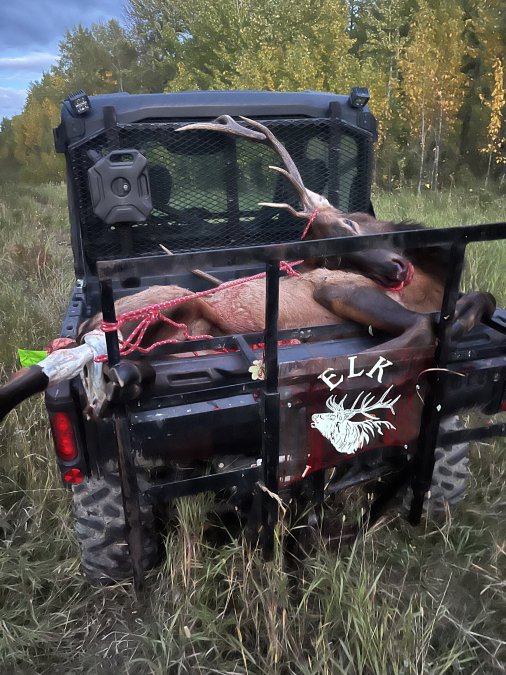
Weight distribution matters more on slopes. A quarter stable on level ground becomes a liability at 30 degrees. One wrong move and you're stuck or sliding backward with a half-ton of game.
This guide covers assessing terrain, loading properly, climbing and descending with a load, and recovery techniques built on real field experience where mistakes cost time and meat.
Assessing Slope Safety Before You Load
Before loading, measure the slope and decide whether you can make the climb. Most hunters skip this and find out too late they've picked an impossible angle.
Measuring slope angle and terrain stability
Use your phone's level app to check the incline. Slopes under 20 degrees are manageable for a loaded UTV. Between 20 and 35 degrees, you need good technique and a capable machine. Above 35 degrees, most loaded UTVs struggle.
Check the ground itself. Probe the slope with your boot, if your foot sinks or slides, your UTV will too. Look for exposed bedrock or compacted earth. Scan for obstacles like hidden rocks or deadfall that could catch a tire.
Go or no-go decision criteria
Ask yourself: Can I walk up this slope without sliding? Is the ground stable? Are there obstacles that could high-center the frame? If you answer "no" to any, find another route. A longer detour beats a stuck UTV or rollover.
Understanding UTV Payload Capacity for Hunting
Your UTV has a maximum payload rating. Exceed it, and you lose stability, traction, and braking. How you set up your UTV before you hunt, tires, drivetrain, brakes, and ground clearance, determines whether you can safely haul game on steep terrain.
Weight limits and load distribution on slopes
Most mid-size UTVs handle 500 to 1,000 pounds payload. A mature elk quarter weighs 150 to 200 pounds; a moose quarter, 250 to 300 pounds. Two quarters plus supplies approach your limit quickly.
Keep heavy loads low and forward. High loads shift the center of gravity upward, increasing rollover risk. Distribute weight evenly side to side to prevent lateral drift on slopes.
Pre-hunt UTV setup checklist for steep terrain
Before heading into steep country, inspect and configure your UTV. This checklist prevents most mechanical failures and control issues.
Tires: Check tire pressure and tread depth. Most UTVs run 20 to 28 psi on rough ground.
Four-wheel drive engagement: Confirm your 4WD system engages fully.
Ground clearance: Measure the distance from the lowest point of the frame to the ground.
Brakes: Press the brake pedal firmly. A soft or spongy pedal indicates air in the brake line or low fluid.
Suspension: Bounce the UTV by pressing down on each corner. It should compress smoothly and return without excessive bounce.
Fuel and coolant: Fill the fuel tank and check coolant level to prevent stalling and overheating on steep climbs.
Trailer setup and securing game
Use ratchet straps rated for at least 1.5 times the load weight. Mount the load low and secure it to the frame. If using a trailer, confirm the hitch is rated for the terrain and the trailer's brakes work independently of the UTV's brakes.
Loading Game onto a UTV on a Slope: Technique and Setup
Loading on a slope is harder than loading on flat ground. Gravity pulls the game downhill. Your footing is unstable. Technique prevents injury and keeps the load balanced.
Vehicle positioning and stabilization
Park the UTV perpendicular to the slope if possible. Engage the parking brake and place rocks behind the tires on steep slopes. Position yourself uphill of the game so it slides away from you if it shifts.
Proper lifting and securing procedures
Bend your knees and lift with your legs, not your back. Have a second person help if possible. If loading solo, slide the quarter onto plywood first, then onto the UTV bed gradually. Secure the load immediately with ratchet straps or a cargo net.
UTV Steep Hill Driving Techniques for Loaded Ascents
Climbing a slope with a load requires smooth throttle control and the right line. Jerky inputs or wrong gear selection stalls the engine or causes wheel spin.
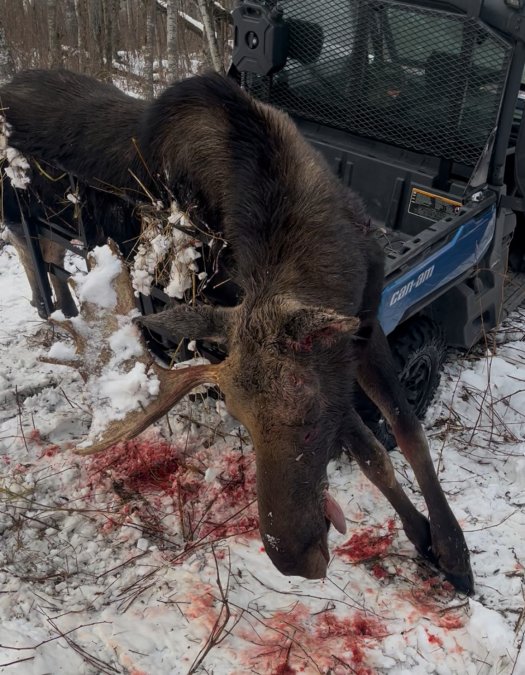
Angle of approach and gear selection
Approach the slope head-on to keep weight centered. Choose low range, first or second gear. Build momentum on flat ground before the slope, do not start climbing from a standstill.
Momentum, throttle control, and line choice
Maintain steady throttle and choose your line before starting, look for the firmest ground and straightest path. If wheels lose traction, ease off the throttle. If the engine stalls, shift to reverse and back down slowly. Assess why you stalled before attempting again.
Descending Steep Terrain with a Heavy Load
Descending with a heavy load is more dangerous than climbing. Gravity accelerates the UTV downhill, brakes can overheat and fade, and mistakes are harder to recover from.
Pre-descent vehicle check
Before descending, inspect your brakes and engine. Feel the brake pedal, it should be firm. Confirm your tires have adequate tread. If you can see the wear bars, replace the tires before descending.
Positioning and line selection
Point the UTV straight down the slope. Do not descend at an angle. An angled descent loads one side of the frame, shifts the load laterally, and risks rollover. Straight down keeps weight centered over the frame.
Choose your line before you start. Look for the firmest ground, the fewest rocks and ruts, and the straightest path downhill. Rocks and ruts throw the UTV sideways and can catch a tire, causing the vehicle to tip. Avoid washouts and deep channels that can trap a wheel.
Gear selection and engine braking
Shift to low range, first or second gear, before descending. Do not coast in neutral. Low gear uses engine braking to slow the UTV naturally and prevents brake overheating.
Brake technique and heat management
Use light, steady brake pressure. Tap the brakes gently every 5 to 10 seconds. If brakes become soft, ease off immediately and let engine braking do more work. Maintain 3 to 5 miles per hour on steep slopes with a load, the only speed at which you can maintain full control.
Load-induced weight transfer and control
Keep your hands on the wheel and make small, smooth steering inputs. If the UTV slides sideways, ease off the throttle and steer downhill in the direction of the slide. If the UTV tips, stay in the seat and lean toward the uphill side to shift your weight.
Trailer descents
If you're towing a trailer, descending is even more critical. The trailer's weight amplifies the load on the UTV's brakes and can cause the trailer to jackknife if you brake too hard. Descend slower than you would without a trailer. Use even lighter brake pressure and rely more on engine braking. If the trailer begins to sway, do not accelerate or brake hard. Ease off the throttle and steer smoothly to stabilize the rig.
UTV Winch for Game Recovery: When and How to Use It
A winch gets you out of trouble when you get stuck. Knowing when to use it and how to use it safely prevents accidents.
Recovery basics and winch placement
A winch pulls with tremendous force. Anchor it to a solid object, a large tree, a rock outcropping, another vehicle. Never anchor to small trees or rocks that could pull free.
Position the UTV so the winch line pulls straight. Angled pulls reduce force and risk breaking the line.
Solo recovery procedures for a stuck UTV
If you're alone and stuck, assess your options. Can you back out? Can you rock forward and backward to gain traction? Try these first. Winching is the last resort.
If you must winch, set the anchor first. Walk the line to the anchor point. Secure it with a tree strap or cable. Return to the UTV and engage the winch slowly. Do not jerk the line. Steady pull is safer and more effective.
Keep people clear of the winch line. If the line breaks, it whips with lethal force. Stand to the side, never in line with the cable.
Common Mistakes That Lead to Tipping, Stalling, or Injury
Most steep-terrain hauling accidents follow predictable patterns. Knowing these mistakes helps you avoid them.
Overloading the UTV. Hunters load a quarter, then another, then supplies, then a passenger.
Poor load securing. A load that shifts during a climb throws the balance off and causes rollover.
Aggressive throttle on climbs. Flooring the gas on a steep slope causes wheel spin.
Descending too fast. A loaded UTV cannot stop quickly on a slope.
Skipping slope assessment. Hunters see a slope and assume their UTV can handle it.
Steep-terrain game hauling demands respect and technique. Assess the slope, load properly, climb smoothly, and descend carefully.
Frequently Asked Questions
How do you safely haul game with a UTV on steep terrain?
Start by assessing the slope angle, angles steeper than 30 degrees demand extra caution. Position your UTV perpendicular to the fall line to maximize stability. Distribute the load low and centered, never above the rear axle. Secure the game tightly using straps or a purpose-built attachment. Ascend slowly in low gear, maintaining steady throttle. Descend in low gear with engine braking engaged. Never brake hard on a slope, as this can cause tipping. A UTV attachment designed for game hauling eliminates manual lifting strain and keeps weight properly positioned.
What is the typical UTV payload capacity for hunting applications?
Most utility UTVs carry a significant payload, though capacity varies by model and suspension setup. A full elk or moose quarter is heavy; multiple quarters plus equipment can quickly approach your limit. Check your vehicle's owner manual for exact capacity. On steep terrain, reduce your effective payload by 15-25% to maintain stability and traction. Weight distribution matters more than total weight, place heavy loads low and centered over the rear axle. Overloading on slopes increases rollover risk and reduces climbing ability significantly.
Should you drive straight up or across a steep hill in a UTV?
Straight up is generally safer than traversing across a slope. Climbing directly reduces the risk of lateral tipping and keeps the load stable over the centerline. However, if the slope exceeds 35-40 degrees, straight ascent becomes difficult and stalling is likely. In that case, a diagonal or switchback approach may be necessary. Never traverse a slope perpendicular to the fall line with a heavy load, this creates maximum tipping risk. Test the terrain at low speed before committing to a loaded climb. If the UTV struggles or slides, turn around and find an alternate route.
What should you do if your UTV gets stuck on a steep slope with a heavy load?
First, do not spin the wheels, this digs in and worsens the situation. Engage all four-wheel drive and low gear. Reduce weight if possible by removing the game temporarily. Rock the vehicle gently forward and backward to build momentum. If that fails, deploy a winch anchored to a stable tree or rock outcrop upslope. Never winch downslope or sideways. If solo, secure the UTV with the parking brake and winch slowly, checking regularly that the anchor point is holding. Once unstuck, reassess the route and descend to find a safer path. A winch is essential equipment for remote steep-terrain hunting.