

Safe Moose Retrieval Techniques 2026: Solo Guide
Table of Contents
- Plan Your Moose Retrieval Before the Shot
- Step-by-Step: How to Load a Moose onto a UTV
- Moose Pack-Out Methods for Rough Terrain
- Solo Hunting Game Retrieval Equipment That Works
- Moose Meat Cooling and Transport in the Field
- Safe Moose Retrieval Techniques for Steep Ground
- Frequently Asked Questions
Last Updated: October 17, 2026
Plan Your Moose Retrieval Before the Shot
Safe moose retrieval techniques in 2026 start long before you pull the trigger. At Elk Hauler, we build equipment for exactly this moment, and the hunters who struggle are almost always the ones who never planned the haul.

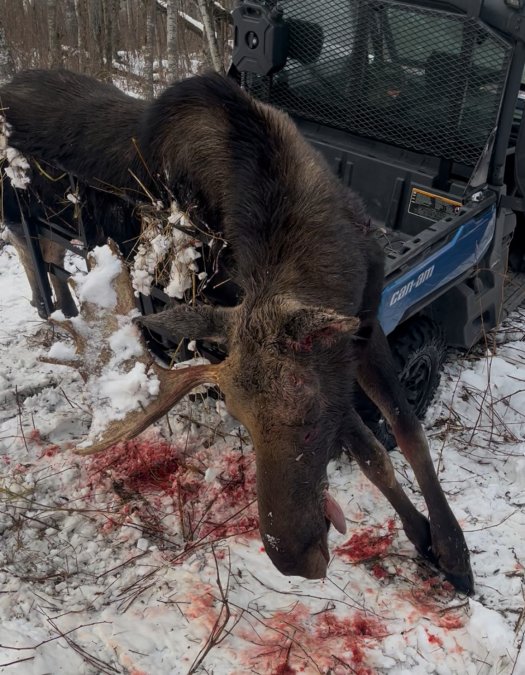
Moose retrieval is the work of moving a field-dressed moose from where it fell to your truck, UTV, or boat without injury or spoiled meat. It gets harder with every metre from the trail, every degree of slope, and every kilogram on your back.
Here's what to settle before you leave the truck:
- Where will the animal likely fall? Glass your hunting spot and pick two or three realistic kill zones.
- What's the shortest route from each zone to a road or trail? Walk it in daylight if you can.
- What's your extraction method? Truck, ATV, UTV, boat, or boots. Decide now, not at dark.
- Who knows your plan? Leave the route and expected return time with someone.
Check your provincial hunting regulations for season dates, licence allocation, and tag conditions before you head out. Provincial and territorial hunting regulations set the legal ground rules, and they change. A calf tag, antlerless moose tag, or bull tag all carry different conditions depending on your wildlife management unit.
Step-by-Step: How to Load a Moose onto a UTV
Loading a moose onto a UTV alone comes down to four things: quartering the animal, positioning the machine, matching the load to the machine's rated capacity, and using mechanical advantage instead of your back.
Before you start: know your numbers. A field-dressed moose quarter typically runs 45-70 kg, and four quarters plus backstraps, neck meat, and trim can total 250-350 kg.
Step 1, Field dress and quarter the moose. Split it into hindquarters, front shoulders, backstraps, and neck meat. A whole moose is not a one-person load, and dragging damages meat and risks injury.
Step 2, Position the UTV on stable, level ground. Get it as close as the terrain allows, facing your exit route so you never have to reverse a loaded machine down a slope.
Step 3, Rig your lifting attachment. Insert the shank into the receiver, secure it with the hitch pin and retaining clip, and connect the wiring if powered. Test the lift with an empty cycle.
Step 4, Attach and lift one quarter at a time. Raise the load to bed height, then swing it over and lower it. Keep your body to the side of the load, never underneath it.
Step 5, Secure every load before moving. Straps on, weight centred over the axle, nothing hanging loose. Load the heaviest quarters first and closest to the machine's centre. A top-heavy UTV on a side slope is a rollover waiting to happen.
Step 6, Re-check the load after the first kilometre. Straps stretch, meat settles, and what was centred in the bed can shift on the first bump. Stop, check, and re-tension before you commit to the rest of the route.
Check your provincial or territorial hunting regulations for any rules on transporting a harvested moose, some jurisdictions require the tag to remain with the meat, some require evidence of sex and species to stay attached until the meat reaches your home or a butcher. Provincial and territorial hunting regulations is the starting point, and the rules vary by wildlife management unit.
Moose Pack-Out Methods for Rough Terrain
Moose pack-out methods in rough terrain fall into four categories, and the right one depends on distance, slope, ground cover, and how many people you have. The table is a starting point; the decision logic underneath it is what keeps you safe.
| Method | Best For | Main Limitation |
|---|---|---|
| Whole-animal drag | Short, flat distances under about 200 m | Damages meat, brutal effort, not a solo option for a mature bull |
| Quartering and backpacking | Bush, no machine access, distances over about 1 km | Multiple trips, slow, weather-exposed |
| UTV or ATV with attachment | Trails and moderate slopes | Needs machine access and a legal route |
| Boat or jet boat | Water-adjacent hunting spots | Limited to shoreline access and safe water conditions |
Wetlands and muskeg. The ground holds water and won't support a loaded machine in many spots. Quarter and backpack, or drag a sled over short distances.
Steep ground. Gravity is the hazard. Work from above the load, never below it, and use ropes and pulleys to lower quarters rather than carrying them down. If the slope is beyond what your UTV can safely handle, pack the meat out on foot in multiple trips.
Dense forest and blowdown. Machine access is usually the limiting factor. Quarter and backpack, plan several trips, and cache meat in the shade, off the ground, and marked.
Remote areas far from road or water. Beyond about 2 km with a mature bull, most solo hunters face three to five round trips, a full day or more. That's why pre-season scouting of the access route matters more than any piece of equipment.
Water-adjacent spots. A boat or jet boat can turn a brutal pack-out into a short carry, but only if the shoreline is accessible and the water is safe. Check the weather and water levels before you commit, and load the boat with weight centred and low.
2026 transport and tagging rules. Once the meat is moving, the legal requirements kick in. Check your provincial or territorial regulations before the season, not after the shot. Provincial and territorial hunting regulations is the starting point.
Moose retrieval in rough terrain is a load-planning problem as much as a physical one. Know your weight limits, know your route, know the legal requirements for moving meat, and don't overload the machine or yourself to save a trip.
Solo Hunting Game Retrieval Equipment That Works
Solo hunting game retrieval equipment should remove strain, not add steps. If a tool needs two people to operate, it's not solo equipment.
What actually earns a place in your kit:
- A receiver-hitch lifting attachment for UTV-based recovery
- Heavy-duty game bags that breathe and keep flies off
- A quality come-along or hand winch for repositioning loads
- Ropes and pulleys for mechanical advantage on steep ground
- A headlamp with spare batteries, because recovery rarely finishes in daylight
- A satellite messenger for emergency contact where cell service dies
The Elk Hauler is built for one-person operation, mounts to most utility UTVs with a receiver hitch, and is engineered in Alberta under U.S. Patent No. 12,419,301. It ships across Canada and the United States within one to two weeks and carries a one-year limited warranty against manufacturing defects.
For hunters over 50, or anyone whose back has already taken a beating, the value isn't convenience. It's avoiding the injury that ends a season, or worse, ends hunting altogether.
Moose Meat Cooling and Transport in the Field
Moose meat cooling and transport is where good retrievals go bad. Heat is the enemy from the moment the animal is down.
Get the hide off and the animal quartered fast. Meat cools from the surface inward, so airflow matters most. Hang quarters in shade, spaced apart, never stacked.
Field care basics:
- Cool first, transport second. Don't load warm meat into a closed vehicle.
- Keep meat off the ground on a tarp, branches, or a rack.
- Use game bags to protect against dirt and insects while letting air through.
- Watch the temperature. Warm days mean a faster clock on getting meat to a cooler.
- Clean as you go. Wipe down tools and keep dirty gear away from exposed meat.
Safe carcass handling also protects you. Wear gloves, keep your hands away from your face, and wash up before you eat. Food safety guidance for wild game covers handling and cooking basics worth reviewing before every season.
Transport is the last leg, and it's where a UTV attachment pays off. Strapped, centred quarters ride better than a dragged carcass and arrive in better shape.
Safe Moose Retrieval Techniques for Steep Ground
Steep ground is where safe moose retrieval techniques matter most. Gravity doesn't negotiate, and a rolling quarter or tipping UTV can kill you.
Rules for slope work:
- Never work directly below a load. Position yourself to the side.
- Use mechanical advantage, not muscle. Ropes, pulleys, and winches keep you out of the danger zone.
- Chock the machine. Wheels blocked before any loading starts.
- Keep loads low and centred to reduce rollover risk.
- Know when to walk away. If the slope is beyond what your UTV can safely handle, pack the meat out on foot instead.
Team communication matters even for solo hunters. Tell someone your plan, carry a satellite messenger, and set a check-in time so someone knows where to start looking.
The Elk Hauler is designed for one-person operation on terrain your UTV can safely handle. That last phrase is the honest limit. No attachment makes an unsafe slope safe.
Check your machine's rated capacity and receiver compatibility before you rely on any attachment. If you're unsure whether your setup is suitable, ask before you buy.
Frequently Asked Questions
How do you retrieve a moose when hunting alone?
Break the animal down into quarters and backstraps first, then move each piece separately rather than dragging the whole carcass. Use a UTV with a receiver-hitch attachment rated for the load, or a game cart on established trails. Keep your route planned before the shot, carry a winch or come-along, and never lift more than you can control. Cooling the meat fast matters more than speed of travel, so pace yourself and work in stages.
What is the safest way to load a moose onto a UTV?
Position the UTV on level ground or chock the wheels on a slope, then use a hitch-mounted lift or ramp rather than dead-lifting quarters. Quarter the moose so each piece stays under your UTV's rated capacity, secure loads with ratchet straps, and keep weight low and centered. The Elk Hauler handles up to 700 lb or your UTV's rating, whichever is lower, and lets one person load game without straining their back.
How long can moose meat stay in the field before it needs cooling?
Get the meat cooling within two to four hours of the kill in mild weather, faster in warm conditions. Field dress immediately, quarter the animal, and hang or elevate pieces so air moves around them. In hot weather, pack quarters with ice or get them to a cooler within a few hours. Meat that stays above 10°C for extended periods risks spoilage and should not be kept.
How can you retrieve a moose across steep or uneven terrain?
Use terrain to your advantage: quarter and drag downhill where possible, and use a UTV only on slopes it can safely handle. A winch or come-along anchored to a sturdy tree lets you move quarters without carrying them. Keep loads light on steep ground, plan an exit route before you start, and bring a partner or satellite communicator if the terrain is technical. Never exceed your UTV's rated capacity on sidehills.
Moose retrieval solo is hard work, and the hunters who do it well aren't stronger than everyone else. They plan the haul before the shot, use equipment that does the lifting, and know their limits on steep ground. Elk Hauler builds a receiver-hitch UTV attachment for exactly that job: one-person operation, 700+ lb capacity, engineered in Alberta, and backed by a one-year limited warranty. Get started with Elk Hauler and bring your harvest out without the drag.